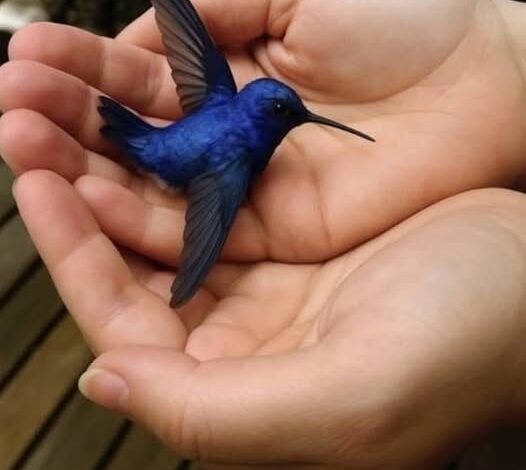
The arrival of a hummingbird at one’s doorstep is rarely experienced as a mere biological event; it is a sudden, iridescent rupture in the everyday fabric of life, a tiny.
Vibrating reminder that the world is far more intricate and alive than our routines allow us to perceive. In the midst of the relentless pace of 2026—a year dominated by high-frequency information streams.
Digital overload, and the constant hum of geopolitical complexity—this diminutive bird arrives as an unlikely but potent intervention.
Its wings beat at speeds of up to 80 beats per second, creating a soft hum that resonates as much in the human psyche as it does in the air.
The hummingbird is both fragile and ferociously alive, an extraordinary expression of life that exists at the very edge of physical possibility.
Its presence signals renewal, a gentle but insistent reminder that even after the longest season of struggle, beauty and vitality can return, piercing through the monotony of modern existence.
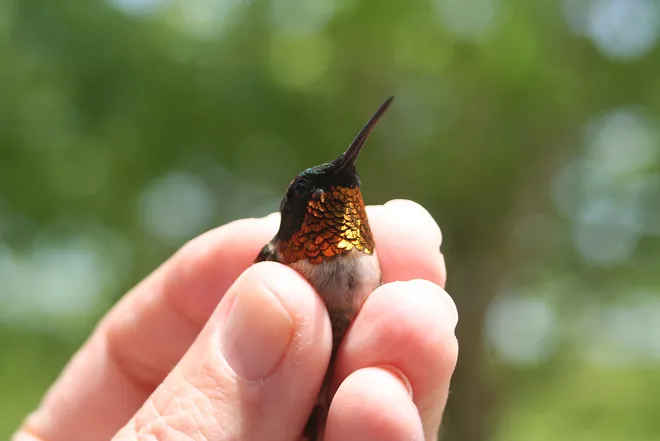
A Messenger of Renewal
For many observers, the hummingbird is not merely a bird but a living emblem of resilience and hope. Its visit is often interpreted as a sign that the emotional or spiritual weight one has been carrying is beginning to loosen.
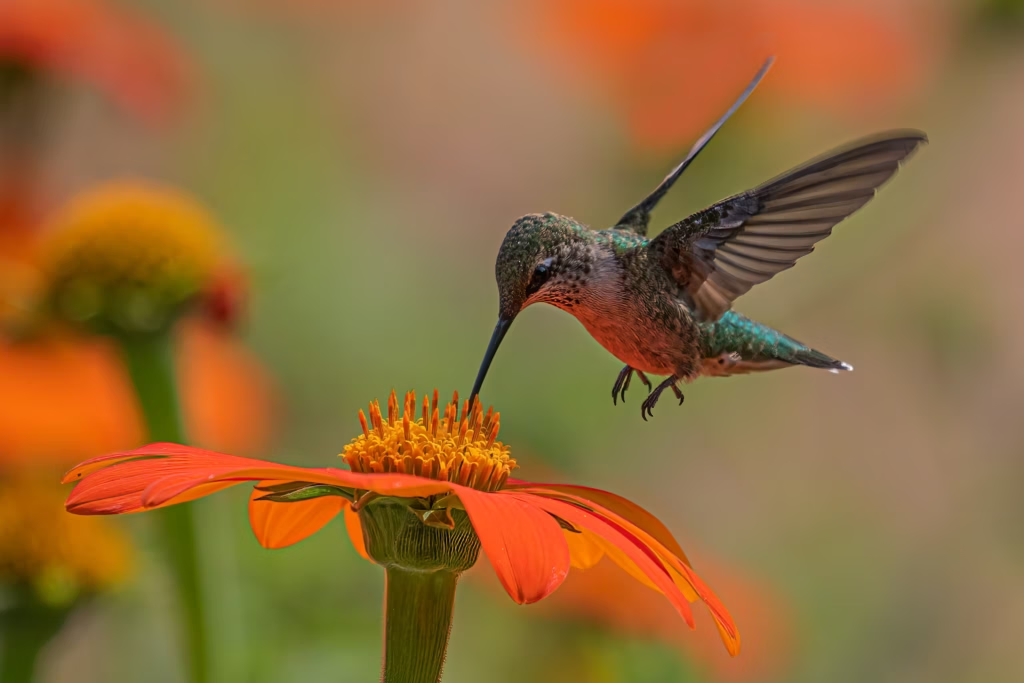
There is a deliberate quality to the way it hovers, seemingly pausing mid-air with absolute control. Unlike larger birds, which often land or perch, the hummingbird maintains a kind of suspended animation, a careful and intentional presence that feels almost designed for observation.
To the person who witnesses it, this behavior can feel deeply personal. In many cultures around the world—from Native American traditions to Caribbean folklore—the hummingbird is regarded as a symbol of endurance, adaptability, and joy.
It is believed to carry messages from the spirit world or from departed loved ones, serving as a reminder that life, in its smallest forms, often carries the most profound lessons.
For anyone navigating the invisible burdens of life, the arrival of this tiny bird can feel transformative. It is as if the universe has sent a small, living beacon to say: “The heaviness you feel is not permanent.
Change, even delicate and brief, is possible.” For those who have faced extended periods of monotony, grief, or stagnation, the hummingbird’s presence is a vibrant, kinetic punctuation mark that disrupts the gray cadence of routine.
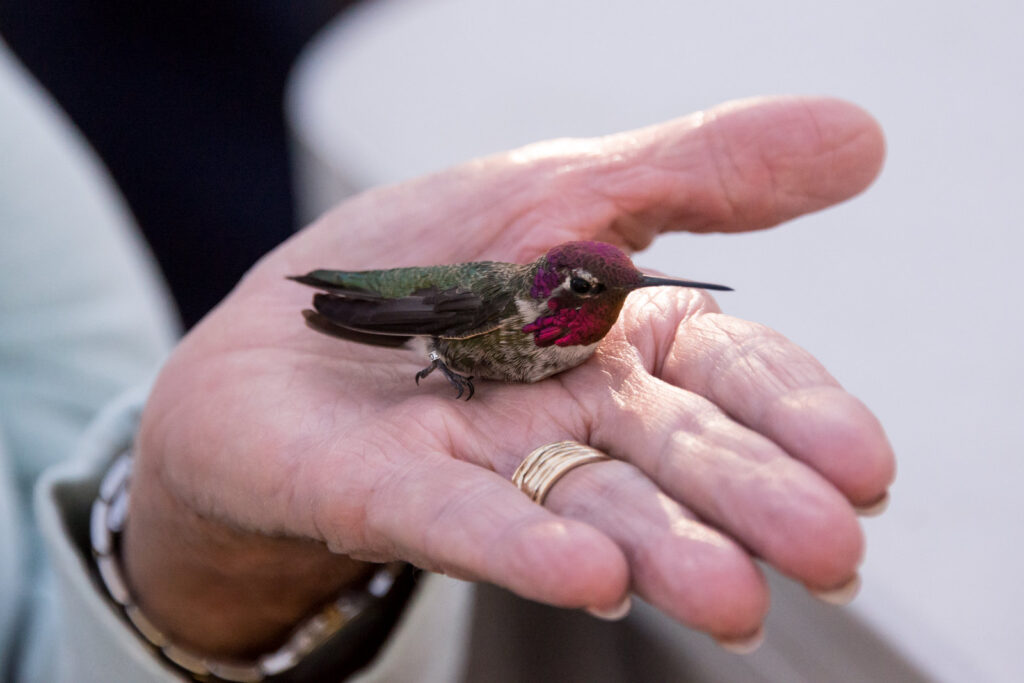
The Thin Doorway: Grief, Loss, and the Spiritual Dimension
For individuals experiencing grief, the significance of a hummingbird often extends beyond the aesthetic or ecological. In moments of profound loss, when the world seems opaque and the living feel separated from those who have passed, the hummingbird is frequently described as a “thin doorway” between realms.
Its rapid, unpredictable movements mimic the fleeting, elusive nature of memory and spirit. In hovering just inches from a windowpane or perching briefly on a garden branch, it creates the sensation of being acknowledged by a presence unseen.
In many spiritual traditions, the hummingbird’s visit is interpreted as a visitation of the departed or a gentle reminder that love does not end with physical absence.
Native American lore, for example, often associates hummingbirds with healing and renewal, noting that their ability to traverse great distances and navigate unpredictable environments symbolizes resilience and adaptability.
For those grieving, seeing a hummingbird can provide a form of nonverbal comfort, a reminder that the cycle of life continues even when personal loss makes it feel suspended.
The hummingbird’s physiological reality underscores its metaphorical resonance. With a heart rate exceeding 1,200 beats per minute and a metabolism so intense that it must consume over its own body weight in nectar daily, the hummingbird embodies the literal embodiment of vitality under pressure.
Its visit is simultaneously a demonstration of extraordinary endurance and a metaphor for the human spirit: even in circumstances of extreme strain, life finds a way to persist, to bloom, to hover against the odds.
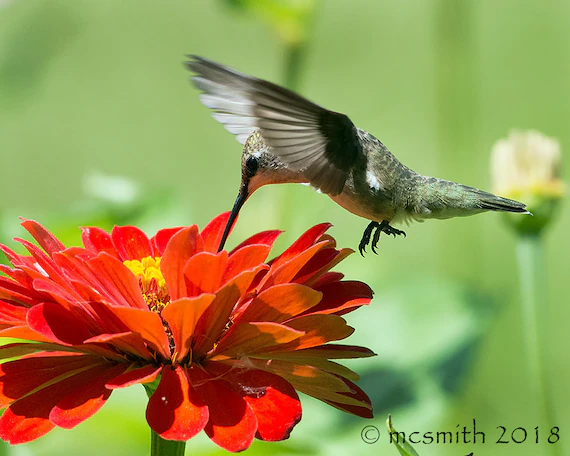
Awe and the Return to Presence
The presence of a hummingbird also has profound psychological effects. In a world dominated by distractions, where attention has become a valuable and contested resource, the hummingbird is impossible to ignore.
Watching it hover, maneuver backward, or pivot in midair forces the observer into the present moment. Neuroscientific research suggests that experiences of awe—such as observing natural phenomena that defy expectations—engage the prefrontal cortex and enhance emotional regulation, promoting empathy, creativity, and a heightened sense of connection to the environment.
In other words, the hummingbird’s fleeting visit does not merely delight; it actively reshapes the observer’s state of mind.
Awe has been linked to improved mental well-being, increased prosocial behavior, and the reduction of self-centeredness. By eliciting wonder, the hummingbird interrupts the habitual cycles of worry and rumination that dominate modern cognition.
Its presence functions as a biological and psychological call to mindfulness, urging humans to notice, to pause, and to recognize the extraordinary embedded in the ordinary. In this way, the hummingbird’s arrival is both a literal and figurative awakening, a reminder that life contains moments of grace that require attentiveness to perceive.
The Science of the Small: Biological Marvels
From a biological standpoint, the hummingbird is one of nature’s most remarkable adaptations. Its unique ball-and-socket shoulder joints allow it to rotate its wings 180 degrees, enabling precision maneuvers, backward flight, and hovering in place—capabilities unmatched by any other avian species.
Its metabolism operates at a rate that would be unsustainable for most animals; hummingbirds can enter torpor—a state of controlled hypothermia—overnight to conserve energy, effectively pausing their metabolism to survive periods without food.
Their tiny brains, although minute in size, are highly specialized for spatial memory. Hummingbirds remember the exact locations of thousands of flowers, along with the timing of nectar replenishment, demonstrating a level of cognitive complexity that parallels larger mammals.
These traits—physical, metabolic, and cognitive—combine to create an animal that is simultaneously delicate and extraordinarily resilient. When such a creature pauses in one’s immediate space, it serves as a profound reminder that complexity, endurance, and beauty do not always require size or mass to leave an impression.
Lessons in Perspective and Micro-Miracles
In the broader context of 2026, a year shaped by global uncertainty, environmental concerns, and the constant barrage of information, the hummingbird’s message is simple yet profound: significance does not always correlate with size.
In human terms, this translates to the impact of small actions, gestures, and moments of presence. Just as the hummingbird alters the energy of a garden, small acts of kindness, attentive listening, and focused care can transform the emotional climate of families and communities.
Moreover, the hummingbird invites reflection on the interconnectivity of life. Its survival depends on a precise balance between energy intake, predator avoidance, and reproductive success.
Humans, too, are embedded in ecosystems of relationships, obligations, and interdependencies. The lesson is both ecological and ethical: attentiveness to the small, the fleeting, and the delicate has consequences that ripple outward in unexpected ways.
Cultural Symbolism and Human Meaning
Across cultures, hummingbirds have long been symbols of joy, love, and persistence. In Mesoamerican cultures, such as the Aztec and Mayan civilizations, hummingbirds were associated with warriors and divine messengers, believed to carry the energy of life itself.
In Caribbean folklore, the hummingbird is a harbinger of good fortune, while in Western spiritual practices, it is often invoked as a sign of renewal and hope.
These symbolic associations resonate particularly strongly in times of personal or societal difficulty. In 2026, when many people experience the fatigue of constant digital engagement and global instability, a hummingbird’s presence offers both aesthetic pleasure and spiritual reassurance.
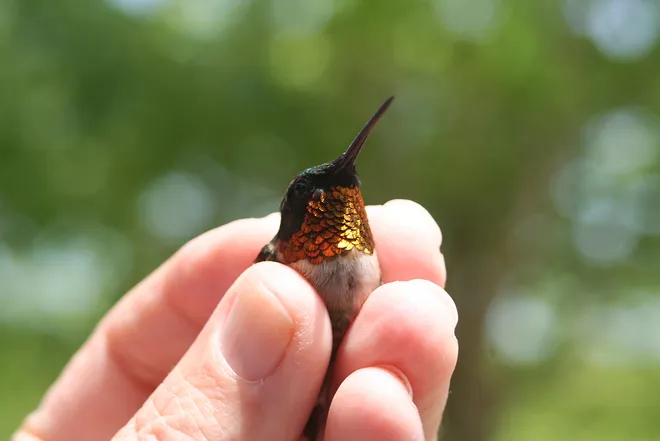
It is a living embodiment of endurance, capable of traversing vast distances, surviving adversity, and navigating obstacles with grace. The bird’s visit, whether interpreted literally, metaphorically, or spiritually, provides an opportunity for reflection, gratitude, and reconnection with the natural world.
Practical Interactions: How to Invite Joy
Those fortunate enough to experience hummingbirds regularly often curate spaces that encourage visitation. Gardens rich in nectar-producing flowers, hummingbird feeders with fresh sugar water, and safe, shaded perches create environments conducive to these remarkable birds.
Observing them over time allows humans to study their behavior, recognize individual personalities, and appreciate the rhythms of their feeding and flight patterns.
Each visit reinforces the message that small, deliberate care—whether for wildlife, family, or oneself—can generate disproportionately large returns in joy and wonder.
In domestic or urban settings, even brief encounters with hummingbirds can become potent reminders of presence and vitality. Their speed and proximity demand full attention, interrupting routines, silencing distractions, and drawing the observer into the immediacy of experience.
Such encounters exemplify the broader human need for micro-moments of wonder amidst the overwhelming demands of modern life.
Resilience and Emotional Renewal
The hummingbird embodies resilience not only biologically but symbolically. Its ability to navigate thousands of miles during migration, its rapid recovery after energy depletion, and its adaptability to variable climates underscore a model of endurance and flexibility.
For humans, the message is that resilience can take many forms: rapid recovery, incremental adaptation, or the cultivation of joy in spite of difficulty. Observing a hummingbird can be a form of psychological recalibration, inspiring renewed hope, patience, and courage in the face of life’s challenges.
For those who are grieving, struggling with burnout, or feeling trapped in routines, the hummingbird represents both metaphorical and literal hope. It encourages the observer to recognize the fleeting, precious nature of life, to embrace wonder, and to remain open to the extraordinary possibilities that emerge when attention is intentionally focused.
A Lasting Impression
When the hummingbird eventually departs, vanishing as abruptly as it appeared, it leaves a changed environment and a subtly altered consciousness.
Air feels lighter, perspectives shift, and ordinary spaces suddenly seem imbued with potential. Its visit is a reminder that grace and beauty persist even when unnoticed, and that life’s most profound interventions often arrive in the smallest packages.
Ultimately, the hummingbird at your doorstep is a gift. It is a demonstration of the extraordinary within the ordinary, a call to presence, and a living symbol of hope and resilience.
By honoring its visit, we honor our own capacity for wonder, care, and attentiveness to the subtle miracles that continue to unfold around us. In a world increasingly dominated by speed, distraction, and digital noise, the hummingbird insists that we slow down, notice, and allow ourselves to be moved.
Its presence ensures that the numbness of routine never fully claims our capacity for awe, joy, or renewal.
