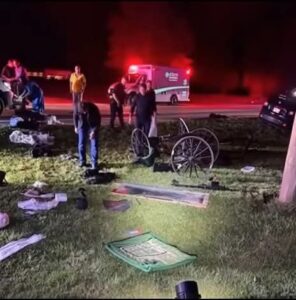
On a quiet stretch of State Road 218 near the outskirts of Berne, Indiana, a rural landscape known for its pastoral calm and centuries-old rhythms was violently interrupted in the early hours of the night.
A collision between a Jeep and an Amish horse-drawn buggy carrying nine passengers did not merely shatter wood and glass—it fractured a sense of security that had defined this tight-knit community for generations.
In the blink of an eye, a family’s steady ride home transformed into a chaotic tableau of emergency lights, sirens, and helicopter rotors cutting through the Indiana darkness.
The incident is a stark illustration of the collision between two worlds: one rooted in tradition, patience, and intergenerational continuity, and the other propelled by speed, technology, and the relentless demands of modern life.
This tragic event has prompted urgent reflection, both locally and nationally, on the fragility of coexistence when centuries-old practices intersect with high-speed 21st-century infrastructure.
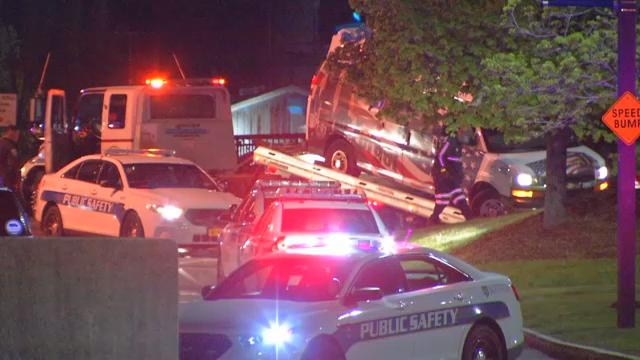
The Immediate Impact
Eyewitnesses describe a scene of devastation. The Jeep, moving at highway speed, struck the rear of the wooden buggy with catastrophic force.
The buggy’s occupants—a father, his children, and several relatives—were thrown into a scene of confusion and terror. Emergency responders arrived quickly, illuminating the rural darkness with portable floodlights as they worked to stabilize the injured.
The father, seriously wounded, was airlifted by a medical helicopter to a trauma center, highlighting the juxtaposition of Amish self-sufficiency with the life-saving capabilities of modern medicine.
Seven of the nine passengers sustained injuries, with the most severe affecting the adult male head of the household.
The children, though physically spared the worst outcomes, now face a psychological “before” and “after,” a moment etched into memory that marks the thin line between safety and tragedy.
Debris—splintered wood, bent metal, and shattered lanterns—lay strewn across the road, a tangible representation of the imbalance between a lightweight horse-drawn carriage and a multi-ton modern vehicle.
The Investigation and Forensic Questions
Investigators from the Adams County Sheriff’s Department began methodically reconstructing the sequence of events. The driver of the Jeep is being scrutinized under 2026-era legal and medical protocols.
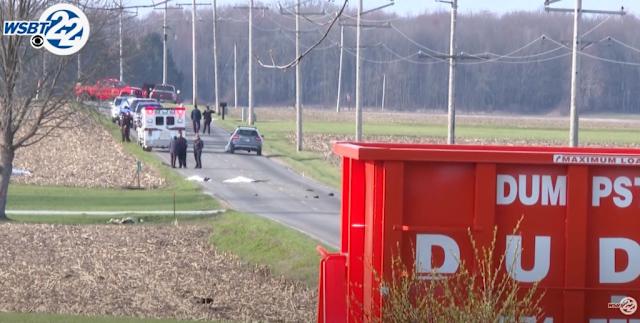
Blood tests were ordered to rule out impairment from alcohol, drugs, or prescription medications. Beyond physical factors, investigators are examining environmental and infrastructural elements: visibility, lighting conditions, and the role of reflective devices on the buggy.
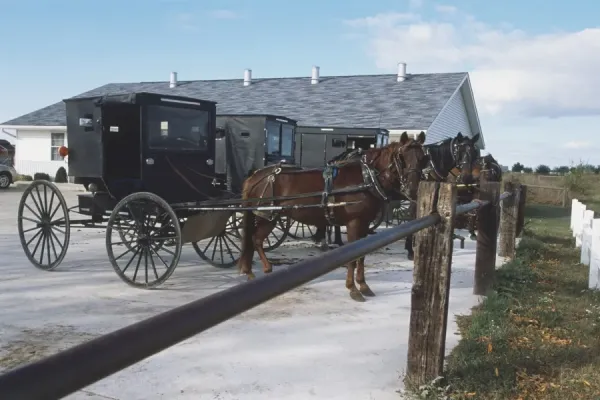
State laws in Indiana, as in many other Amish-populated regions, require horse-drawn carriages to be equipped with lanterns, reflective tape, and, in some cases, battery-powered flashing lights.
Yet even under optimal compliance, the physics of the collision rendered these precautions nearly insufficient. At highway speeds, a vehicle can cover the length of a football field in mere seconds, leaving minimal reaction time when a slow-moving buggy emerges from darkness.
This “recognition gap” underscores the lethal realities of shared rural roadways where modern and traditional vehicles must coexist.
The Amish Community and the Philosophy of Ordnung
To understand the full impact of this tragedy, it is essential to grasp the cultural framework of the Amish community.
Amish life is governed by the Ordnung, a set of rules designed to preserve community cohesion, religious devotion, and family integrity. By eschewing automobiles, the Amish intentionally slow the pace of life, emphasizing interpersonal connections, agricultural work, and spiritual focus.
Yet these choices also place the community in direct conflict with modern infrastructure. Roads once used for horse-drawn wagons are now high-speed corridors for commuters, freight vehicles, and long-distance travelers.
Every journey, from a church gathering to a simple grocery run, carries a risk that the community has historically mitigated through caution and shared knowledge.
The collision on State Road 218 highlights the physical consequences of this tension: the slow, deliberate rhythms of Amish life meet the velocity and distraction inherent in modern travel.
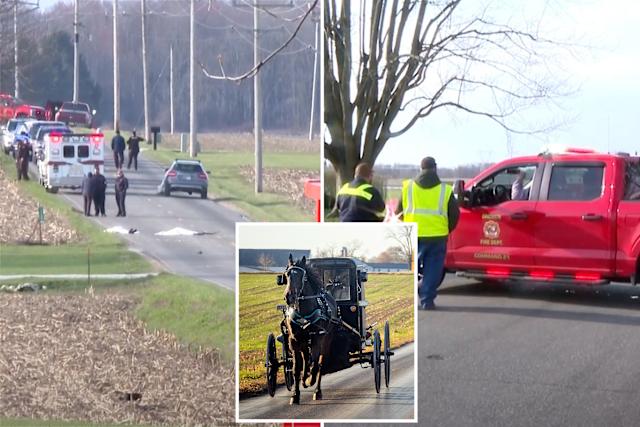
The Role of Modern Medicine in an Ancient Lifestyle
Ironically, while the Amish deliberately limit the use of technology in daily life, modern medicine often intersects with their existence in critical moments.
The airlift of the injured father demonstrates this paradox vividly. The same community that values self-sufficiency, horse-drawn transport, and manual labor now relies on helicopter paramedics, intensive care units, and technologically advanced trauma interventions to preserve life.
Recovery for the injured children and adults will be a long and complex process. Physical healing will be complemented by emotional and psychological support provided by the community.
Amish traditions emphasize collective care: neighbors, extended family, and church members will organize meals, manage farm operations, and provide logistical support, ensuring that the family can focus on recuperation.
In Berne, “bearing one another’s burdens” is not metaphorical; it is a lived principle that sustains families through crises.
Psychological Aftermath and the Burden of Trauma
The collision is likely to have lasting psychological effects on both the immediate family and the broader community. Children exposed to such an event can experience anxiety, nightmares, and heightened vigilance regarding road safety.
For parents and elders, the trauma may prompt reflection on the balance between cultural adherence and the practical realities of the modern world.
Experts in rural trauma note that communities like Berne often display remarkable resilience, partially due to social cohesion and collective coping strategies.
Shared faith, intergenerational care, and daily routines contribute to emotional stability. However, the long-term psychological impact should not be underestimated, particularly for young children who witnessed their father’s life-threatening injuries.
Counseling—whether through pastoral care, community elders, or external mental health professionals—may become an essential component of the recovery process.
Infrastructure Challenges and Road Safety
The collision also prompts broader questions about rural infrastructure. In counties with significant Amish populations, officials are exploring measures such as wider road shoulders, increased signage, and dedicated buggy lanes.
These interventions aim to reduce the speed differential between motorized and horse-drawn vehicles, minimizing the risk of future accidents.
Yet engineering solutions have limitations. Road safety ultimately depends on human awareness, particularly drivers who are unfamiliar with horse-drawn traffic.
The tragic events on State Road 218 illustrate that even with proper infrastructure, vigilance, empathy, and responsible driving behavior are indispensable. Drivers must recognize that rural roads are shared spaces, where centuries-old practices coexist with modern transportation demands.
The Broader Cultural Implications
The Berne accident is more than a local tragedy; it serves as a metaphor for the broader friction between tradition and modernity.
The Amish strive to maintain a slower, intentional lifestyle that emphasizes community, spirituality, and continuity. Modern society, by contrast, prizes speed, efficiency, and technological progress. When these two worlds collide—literally and figuratively—the consequences can be catastrophic.
This collision invites reflection on societal priorities. How do we preserve cultural traditions while accommodating technological advancement? How do rural communities protect themselves without sacrificing the principles that define them?
The answers require careful consideration of ethics, engineering, and empathy, highlighting the responsibilities of both community members and external actors.
Collective Resilience and the Path Forward
Despite the devastation, the Amish community’s response exemplifies resilience. Families will rebuild, children will recover, and communal support will provide both practical and emotional sustenance.
The father’s survival, facilitated by rapid medical intervention, offers a focal point for hope. The event will inevitably influence how the community engages with road safety, emergency preparedness, and intergenerational teaching regarding travel precautions.
In this sense, the collision serves as a catalyst for proactive reflection. It underscores the need for ongoing dialogue between rural communities, local governments, and broader society to ensure that traditional lifestyles can persist safely in a world dominated by high-speed mobility.
Lessons for Drivers and Communities
The Berne incident is a sobering reminder of shared responsibility. Drivers must exercise heightened awareness on rural roads, particularly in regions where horse-drawn traffic is common.
Even moments of distraction—whether from smartphones, fatigue, or routine assumption—can have life-altering consequences. Communities and policymakers must continue to adapt infrastructure, while education campaigns highlight the importance of respecting the presence of slow-moving vehicles.
For the Amish, the event reinforces the necessity of prudence, preparation, and adherence to visibility standards, including lanterns, reflective tape, and other signaling devices. While no measure can completely mitigate the risks of mixed-traffic roads, these precautions remain essential in preventing future tragedies.
Legacy and Reflection
Ultimately, the collision on State Road 218 is a story of two worlds intersecting under tragic circumstances. The wooden buggy and the steel Jeep are more than vehicles—they are symbols of contrasting approaches to life, technology, and community.
The crash is a testament to the fragility of human life and the profound responsibilities that accompany modern speed and power.
For the Berne community, the event is now woven into the narrative of collective memory. The children will grow up acutely aware of the risks inherent in their way of life.
Families will continue their routines with a sharpened sense of caution and mutual care. Neighbors will rally, not merely to manage the immediate fallout, but to reinforce the bonds that define their shared existence.
In a world increasingly dominated by velocity, efficiency, and the rapid turnover of information, the Berne tragedy reminds us that some values—faith, community, deliberate living—require protection.
As the father fights for his life and his children embark on the long journey of healing, the Amish community demonstrates that resilience is not merely an abstract principle but a lived reality. They move forward, slowly and deliberately, honoring their traditions while navigating the hazards of modernity—one clip-clop at a time.
Conclusion
The Jeep-buggy collision near Berne, Indiana, is more than a news story; it is a lens through which we examine the intersection of tradition, technology, and human vulnerability.
It is a reminder that cultural preservation comes with inherent risks when juxtaposed against the momentum of modern life. Yet it is also a story of remarkable resilience, community solidarity, and the enduring capacity for human care.
As the wreckage is cleared, as the sirens fade, and as the injured begin to recover, the lessons remain. Speed carries responsibility. Tradition carries vulnerability. And in the quiet aftermath, communities—Amish or otherwise—must balance the imperatives of safety, faith, and the human desire for continuity.
The Berne incident will leave scars, yes, but it will also reinforce the strength of a people who refuse to let the violence of modernity diminish their commitment to family, faith, and enduring love.
